They Quit Cigarettes and Never Looked Back: Real Vapers Share Their Stories
The statistics around smoking in America are well-documented, but numbers don't really capture what it feels like to light your last cigarette. Or the weird grief of putting down something you've done every day for a decade. Or the first morning you wake up and realize your chest doesn't feel like a damp sponge anymore.
We reached out to long-term vapers — people who made the switch at least two or three years ago and actually stayed with it — and asked them to tell us what really happened. No sales pitch, no clinical language. Just their actual experience.
"I'd Tried Everything Else. Vaping Was the First Thing That Felt Like a Real Swap."
Marcus, 41, Atlanta, GA — smoked for 18 years, vaping for 4 years
Marcus tried the patch twice, gum more times than he can count, and a prescription medication that gave him vivid nightmares. "Nothing stuck," he says. "I'd make it two weeks, maybe three, and then something stressful would happen and I'd buy a pack."
The shift came when a coworker showed up with a pod system. "I thought it was going to be one of those things where you use it for a week and go back. But it actually scratched the itch. The hand-to-mouth thing, the exhale — it was familiar enough that my brain didn't immediately go into full panic mode."
His first few months weren't perfect. He kept a pack of cigarettes in his glove compartment "just in case" for about six weeks before he finally threw them out. He also went through a phase of vaping way more frequently than he'd smoked, something he had to consciously dial back. "I was basically chain-vaping at my desk. Had to set some ground rules with myself."
Four years in, Marcus is on a low-nicotine salt formula and has cut his usage significantly. "I still enjoy it. That's the honest answer. I'm not white-knuckling it. I just enjoy it a lot less desperately than I used to need cigarettes."
"The Smell Was the Thing That Finally Got Me"
Danielle, 34, Portland, OR — smoked for 9 years, vaping for 3 years
Danielle describes herself as a "social smoker who accidentally became a pack-a-day smoker" in her late twenties. The pivot point was embarrassingly mundane: her dog started moving to a different part of the couch when she came inside.
"I know that sounds ridiculous, but that dog had slept on me every night for six years. And suddenly she'd just... relocate. I smelled it on myself after that. Really smelled it. I couldn't un-notice it."
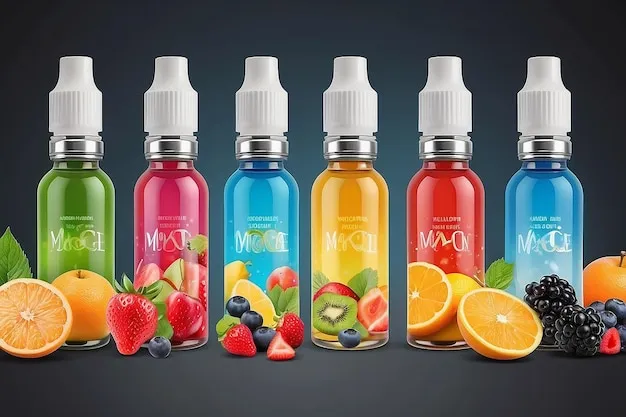
She started vaping with a basic starter kit and a tobacco-flavored pod, trying to keep things as close to familiar as possible. "I thought fruit flavors were for teenagers. Turns out tobacco vape flavors are kind of terrible, so I eventually branched out." She landed on a vanilla custard profile that she still uses today.
The hardest part for Danielle wasn't the nicotine — it was the social ritual. "I had friends I only really talked to during smoke breaks at work. That whole community just kind of evaporated. Vaping doesn't have the same gravitational pull."
She sees that as a net positive now, but acknowledges it took some adjusting. "You lose a weird little subculture. Then you realize that subculture was kind of held together by a shared addiction, and you feel differently about it."
"I Didn't Think I'd Be Someone Who Vaped. Then I Was."
Trevor, 52, Columbus, OH — smoked for 27 years, vaping for 5 years
Trevor started smoking in his mid-twenties, which he describes as "embarrassingly late to start, embarrassingly hard to stop." He had a complicated relationship with the idea of vaping before he tried it. "I thought it was a young person thing. I had this image in my head of some kid doing tricks at a mall."
A health scare — nothing catastrophic, but enough to get his doctor's attention — pushed him to take alternatives more seriously. His doctor mentioned that some patients had found vaping useful as a transition tool, which gave him enough cover to try it without feeling like he was doing something frivolous.
"I went to a vape shop in Columbus and the guy behind the counter spent like 45 minutes with me. Explained the difference between devices, talked me through nicotine levels. I didn't feel judged. I felt like a customer."
He started on a higher-nicotine salt to manage the transition, then gradually worked down. Five years later, he's at 3mg freebase and vapes maybe five or six times a day. "I used to smoke a pack and a half. The math on that alone is wild to me."
Trevor's biggest surprise was how much his sense of taste and smell returned. "I thought that was overblown. It's not overblown. Food tastes different. My wife noticed before I did."
What These Stories Have in Common
Every person we spoke with had a different trigger, a different timeline, and a different relationship with their device today. But a few threads run through almost all of them:
The transition wasn't linear. Almost everyone had a period of using both cigarettes and a vape, and most felt some guilt about that. The consensus now is that the overlap period is normal and doesn't mean you failed.
Flavor mattered more than expected. Multiple people described finding the right flavor profile as a turning point — something that made vaping feel like an actual preference rather than a consolation prize.
The ritual replaced the ritual. What kept most people from going back wasn't willpower alone. It was finding a new habit that satisfied the same behavioral need — the pause, the exhale, the moment of stepping away.
Nobody did it perfectly. Every story had a rough patch, a moment of backsliding, a period of figuring things out. The people who stuck with it weren't the ones who never struggled. They were the ones who kept adjusting until it worked.
A Note on What This Isn't
These are personal stories, not medical advice. Vaping involves nicotine, which is addictive, and the long-term research is still developing. If you're considering making a switch, talking to a healthcare provider is always a solid move. What these stories offer isn't a roadmap — it's a reminder that real people have navigated this transition and found something that works for them.
That's worth something.